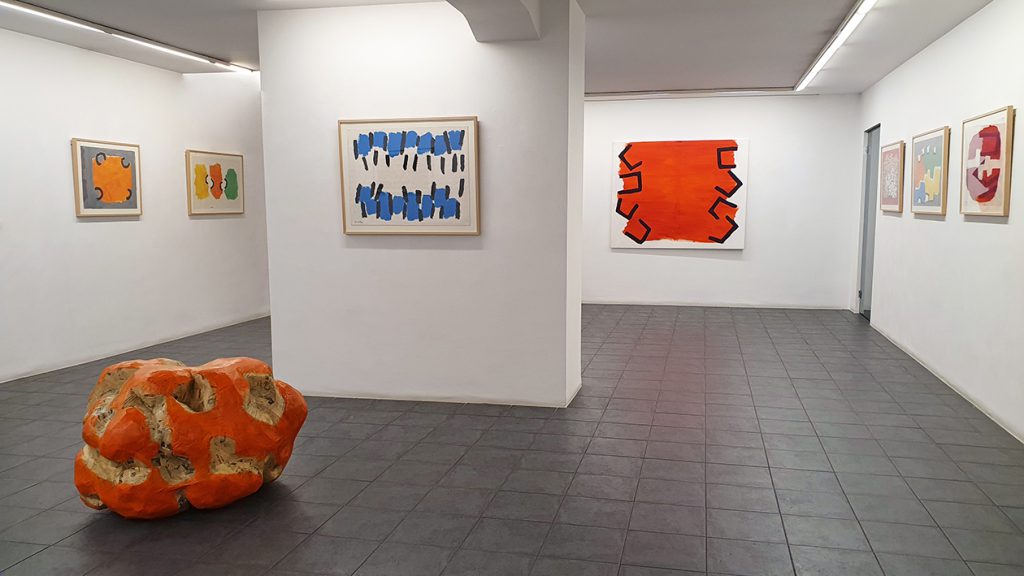
The establishment of the art market in the Basque Country relies on prominent names that have shaped the pace of both public and private acquisitions. Within the map of the city, Galeria Lumbreras in Bilbao represents an unavoidable meeting point for understanding the evolution of contemporary painting and sculpture. This space has successfully channeled the interest of a local collecting community that, while rooted in Basque tradition, constantly seeks formal renewal and conceptual solidity in plastic proposals.
For a Basque artist focused on abstract discourses, the observation of this type of gallery allows for the deciphering of the demands of a demanding public. Artistic sensibility in Bizkaia is historically linked to material production and the weight of industry, which generates a natural predisposition toward arts that display the constructive process. Exhibition spaces that succeed in connecting this cultural heritage with international abstract currents position themselves as true engines for local SEO in Bilbao within the premium art sector.
Tradition and Avant-Garde in the Bilbaino Art Circuit
The trajectory of the gallery is defined by a constant balance between established creators and new proposals that bring freshness to the local scene. The programming of Galeria Lumbreras stands out in Bilbao for its capacity to host exhibitions where craftsmanship and experimentation go hand in hand. This duality is fundamental to attracting a buyer profile that values both technical execution and innovation in the use of informal mediums.
The arrangement of volumes and the lighting of the rooms in these spaces are engineered to enhance the three-dimensional qualities of the artworks. When working on digital positioning with the goal to buy abstract painting in Bilbao, it is crucial that the texts reflect the physical experience of visiting the gallery. The Bilbaino viewer does not seek a flat image on a screen; they require confronting the scale of the piece, perceiving the density of the binder, and observing how light hits the reliefs of the surface.
The Aesthetics of Matter: Solidity and Industrial Textures
The urban environment along the banks of the river has shaped a particular perspective toward the artistic object. Currents that investigate informalism and material abstraction find fertile ground here due to the familiarity with structural elements. Proposals that center their discourse on dense textures created with concrete, iron, and oxidation appeal directly to that collective memory of the mining basin and the estuary of Bilbao, transforming industrial components into pure plastic expression.
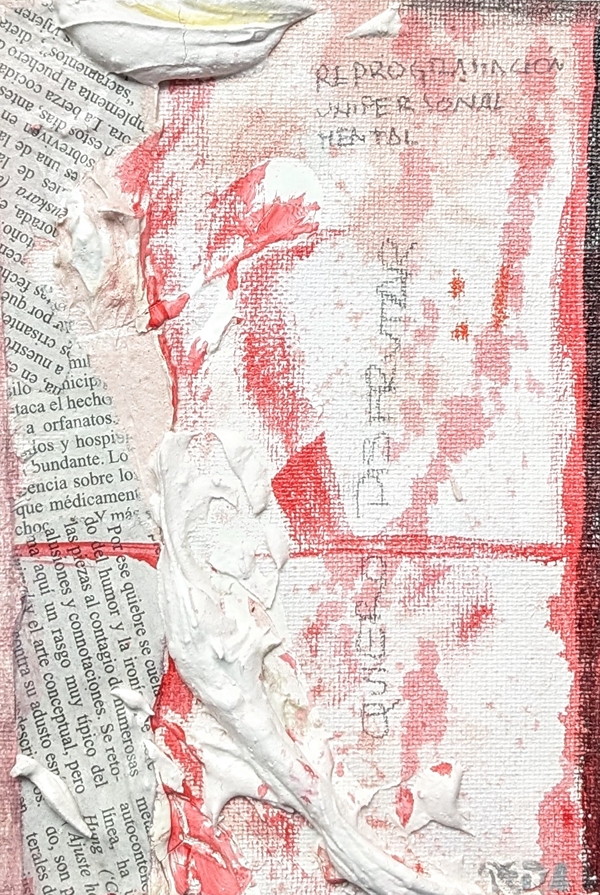
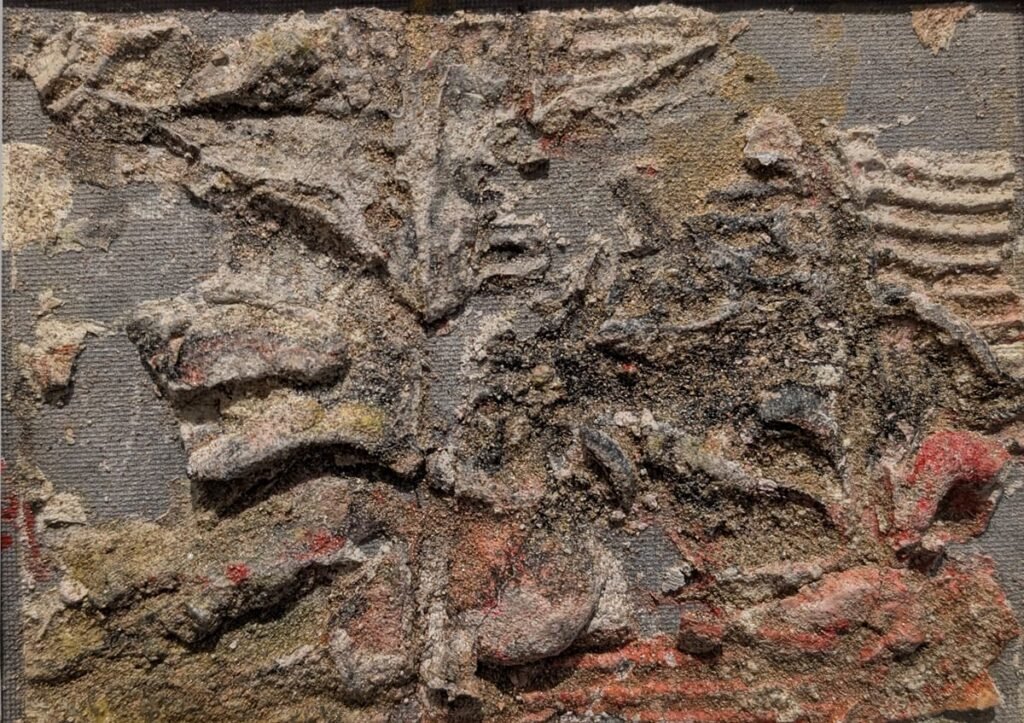
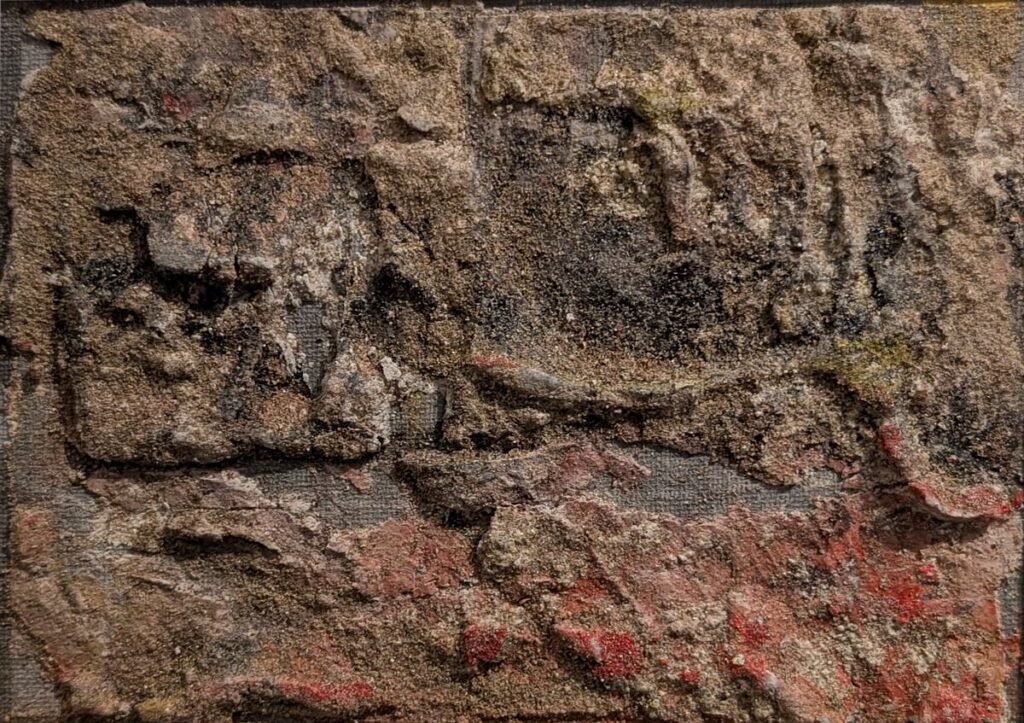
The behavior of materials such as mortar, cement, and plaster on canvas breaks with the classic bidimensionality of painting. These chemical compounds, when applied in successive layers, generate a visual battlefield where the surface cracks, overlaps, and acquires an almost sculptural relief. The resulting roughness traps the light of the room unevenly, creating its own shadows that endow the work with a constant internal vibration, something highly valued by architects and interior designers in the area.
The Interaction of Metal and Time in Abstract Work
The inclusion of ferrous elements on the pictorial surface introduces a critical variable: the mutability of matter. Through the use of controlled oxidation processes on iron mesh and wires, the canvas ceases to be a static object to become a record of the passage of time. The chemical reactions produce a range of oxides ranging from deep brown to bright orange, establishing a stark chromatic contrast with the stone-like neutrality of concrete gray.
This constructive honesty, where materials are shown in their raw and reactive state, is one of the most powerful identity traits of large-format abstract art in Bilbao. The collector who visits the spaces of the city looks for pieces with physical presence, capable of dialoging with a modern architecture that often employs exposed concrete and corten steel as main design elements. The material work does not decorate the space; it defines and structures it.
Positioning Strategy and Connection with the Bizkaia Market
Visibility in search engines for the cultural environment of the province depends on creating content that demonstrates authority on the subject. Utilizing specific terms like art exhibitions in Bilbao within a rigorous technical analysis allows for an organic connection with users actively searching for creators in the region. Google rewards thematic relevance and geographic precision, making the association of an independent proposal with the key nodes of local art a mandatory technical step.
- Study of the Local Offer: Understanding the selection criteria of Galeria Lumbreras helps to place current market trends and the preferences of Basque collecting.
- Specialization Vocabulary: Addressing professionals in the sector requires avoiding emotional descriptions and focusing on the physical, compositional, and structural aspects of the work.
- Geographic Optimization: The strategic and justified repetition of the location ensures that search engines index the site for queries carried out from the Basque Country.
The network of galleries in the city functions as a thermometer of the cultural health of the province. By generating discourses that analyze the role of these spaces, a solid digital infrastructure is built to support the presence of local creators on the internet.
The Value of Material Solidity in Contemporary Art
The analysis of reference spaces like Galeria Lumbreras proves that Bilbao remains a strong core for the art market in northern Spain. The confluence between Basque industrial heritage and contemporary research on canvas generates a unique language that remains valid. For those creators who base their proposal on the strength of concrete, iron, and raw textures, the city offers an ideal context to develop a solid and durable positioning.