2 · Spark and Notes: The Archive of Intuition
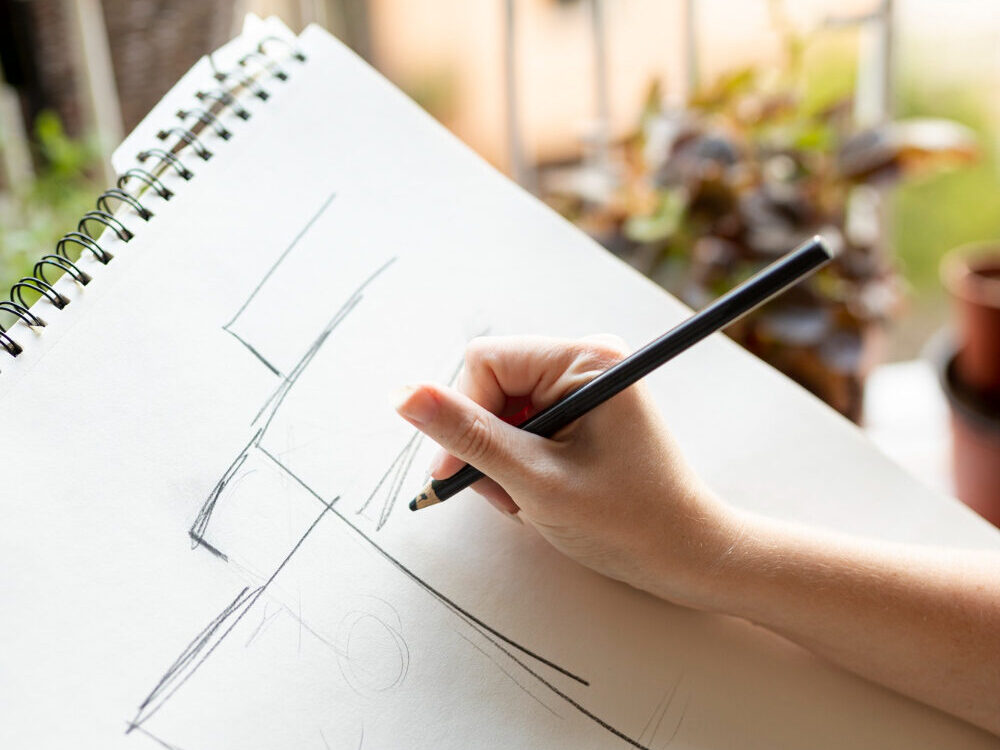
For an artist, the most critical moment isn’t the first stroke on canvas, but the preservation of an impulse. “Spark and Notes” is my personal laboratory—the bridge between the raw emotion of the world and the physical reality of the studio. It is here where the “Encounter” begins its transformation into a concept.
The Word as an Anchor
While many expect an artist to rely solely on images, writing is my primary tool. I write to understand. I record my environment not as a journalist, but as a witness to the intangible. I write about feelings and the subtle shifts in my surroundings: the weight of a silence, the tension of a conversation, or the specific melancholy of a fading light.
Writing allows me to save the impulse before the mind tries to rationalize it. These notes are often raw, poetic fragments that act as anchors; when I revisit them weeks later, they don’t just remind me of what I saw—they make me feel what I felt. This emotional record is what ensures the final painting has a soul.

Linear Thinking: Vanishing Points and Themes
Alongside the written word, I use drawing as a way of spatial inquiry. I am fascinated by vanishing points and the architecture of the void. In my notebooks, I trace lines of fuga (vanishing lines) to dissect how space is constructed and how it might be broken. These sketches are not “pretty” drawings; they are analytical maps.
I work in “themes.” I might spend weeks obsessing over a single concept—the way a root anchors itself to a rock or the psychological pressure of an empty room. I explore these themes through repetition, drawing and redrawing lines until the structure reveals its true energy. It is a process of refinement through obsession, where I filter out the noise until only the essence remains.
The Incubation of the Seed
A note or a sketch is a seed. Some germinate instantly; others require weeks or months of silence. I don’t push the process. I allow these thoughts to rest in the pages of my notebooks, waiting for the moment when the inner image wants to emerge.
I wait until the idea no longer feels like a memory, but like a necessity—as if it already possesses its own shape, sound, and material weight. Only then, when the spark has been nurtured by thought and feeling, do I take it into the studio. This archive of intuition is the foundation of everything I create; it is the intellectual and emotional map that guides me through the abstraction.
