I. Composition and Spatial Rhythms
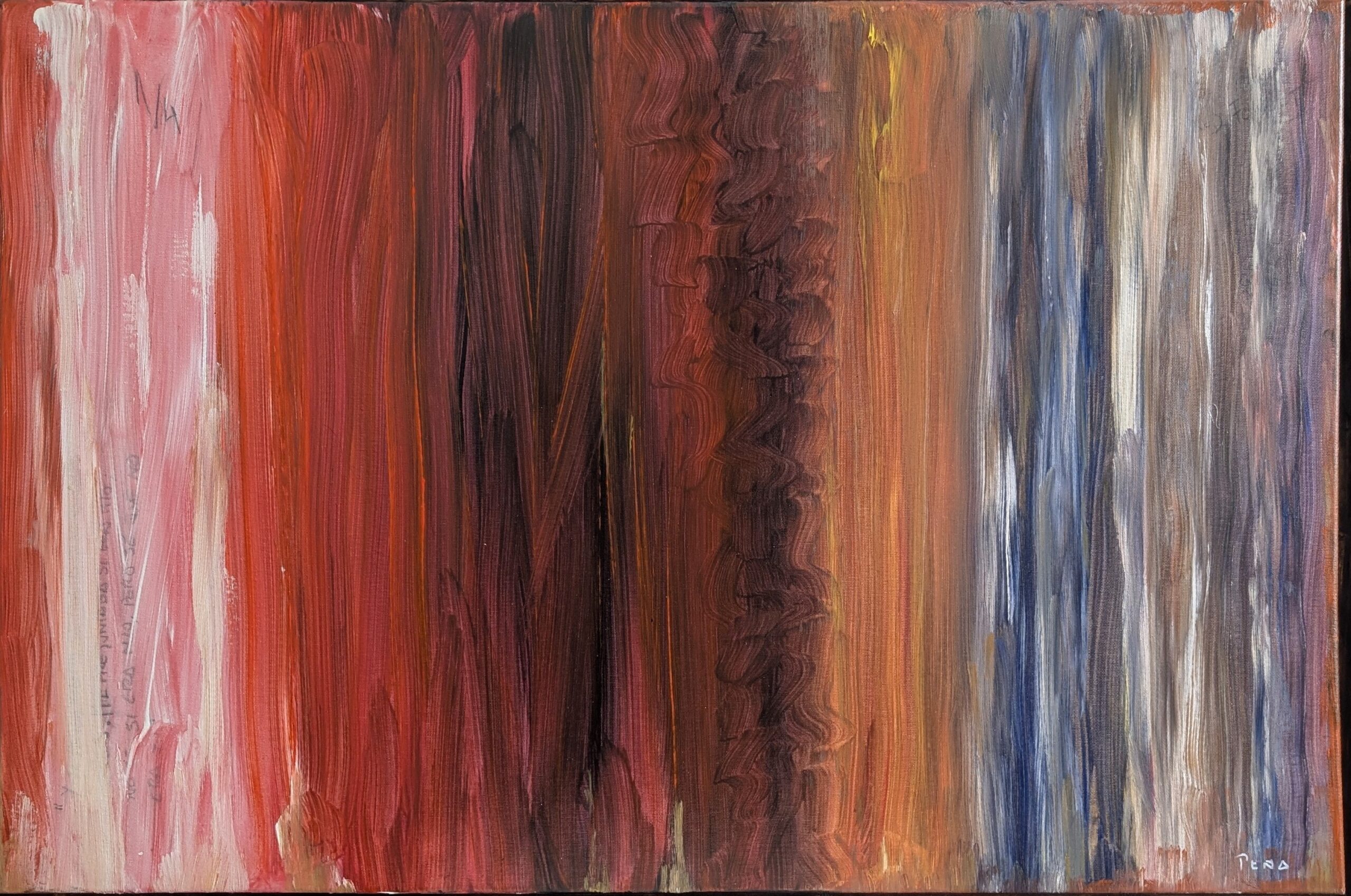
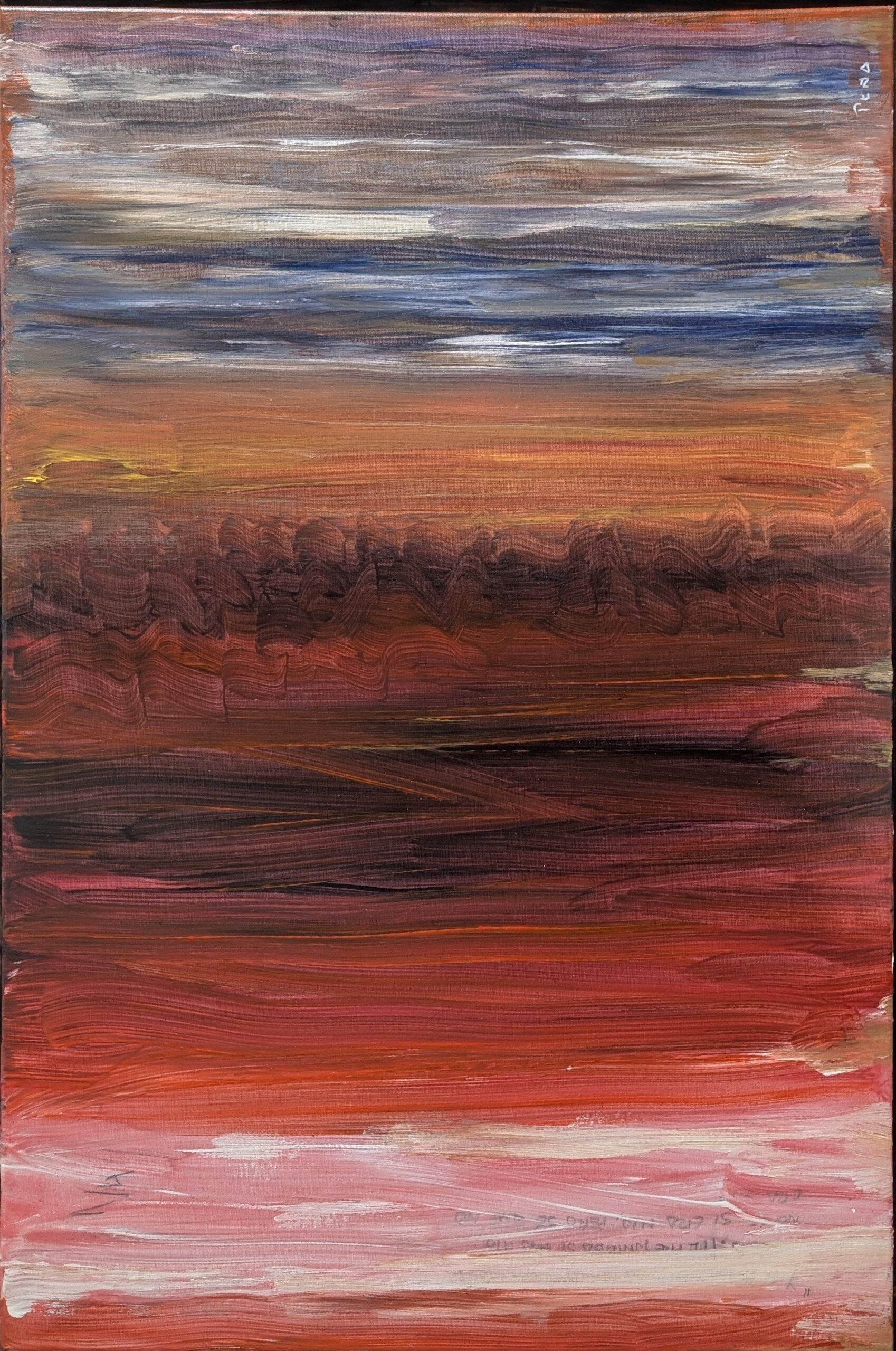
Vertical Segmentation: The artwork is structured through a rigorous sequence of vertical color fields that divide the canvas into distinct zones. This linear progression establishes a rhythmic movement across the surface, guide-lining the gaze from left to right without a singular focal point.
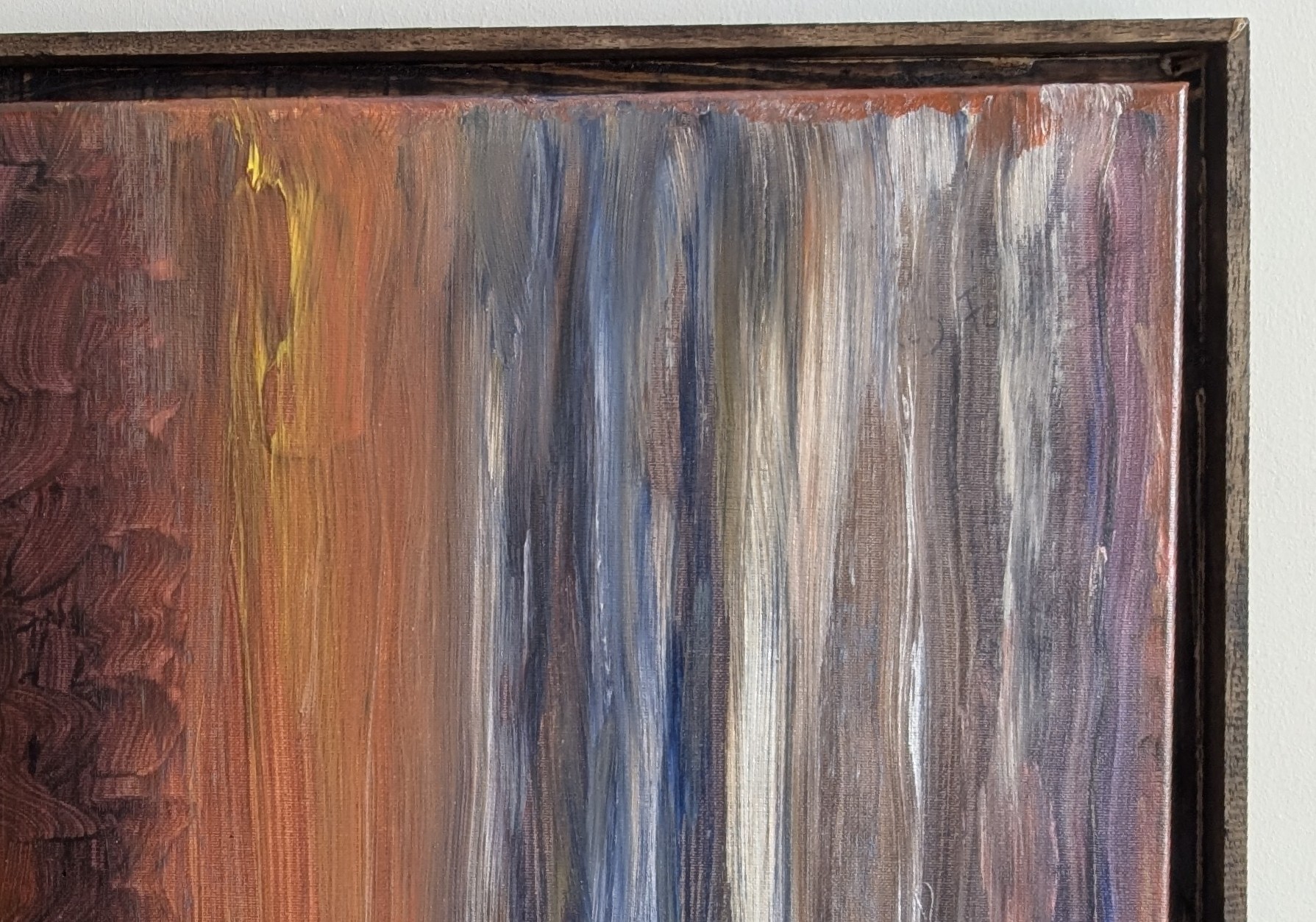
Structural Framing: The canvas is enclosed in a dark wooden floating frame (caja americana). The physical separation between the edge of the stretcher and the inner profile of the frame introduces a rigid geometric boundary, contrasting with the fluid and organic execution of the paint layers.
II. Palette, Temperature, and Texture
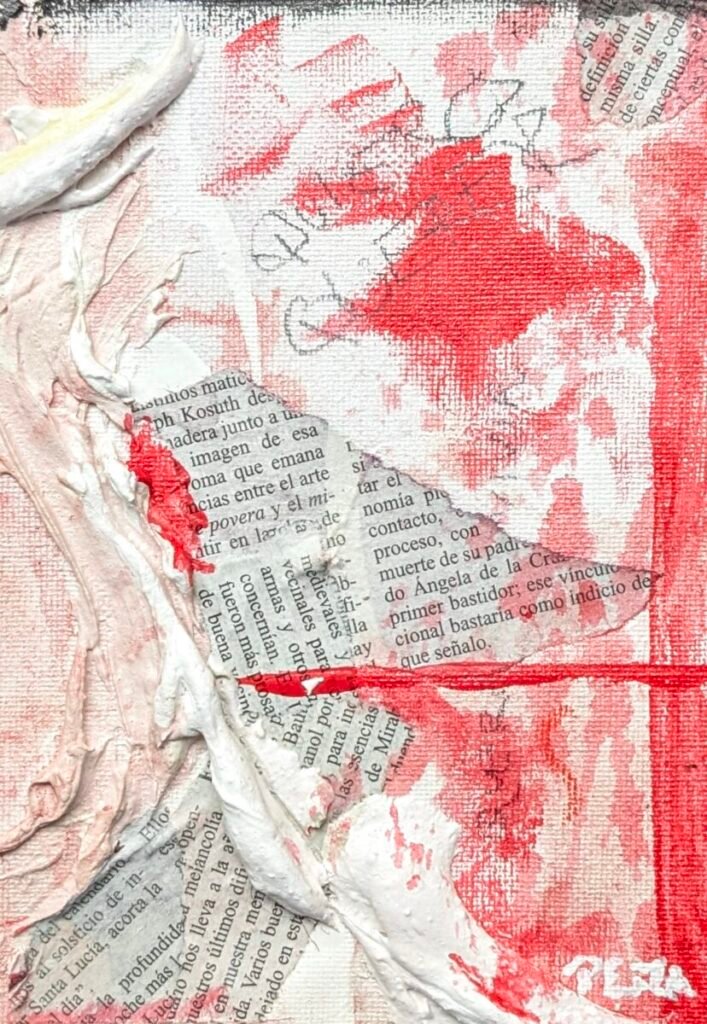
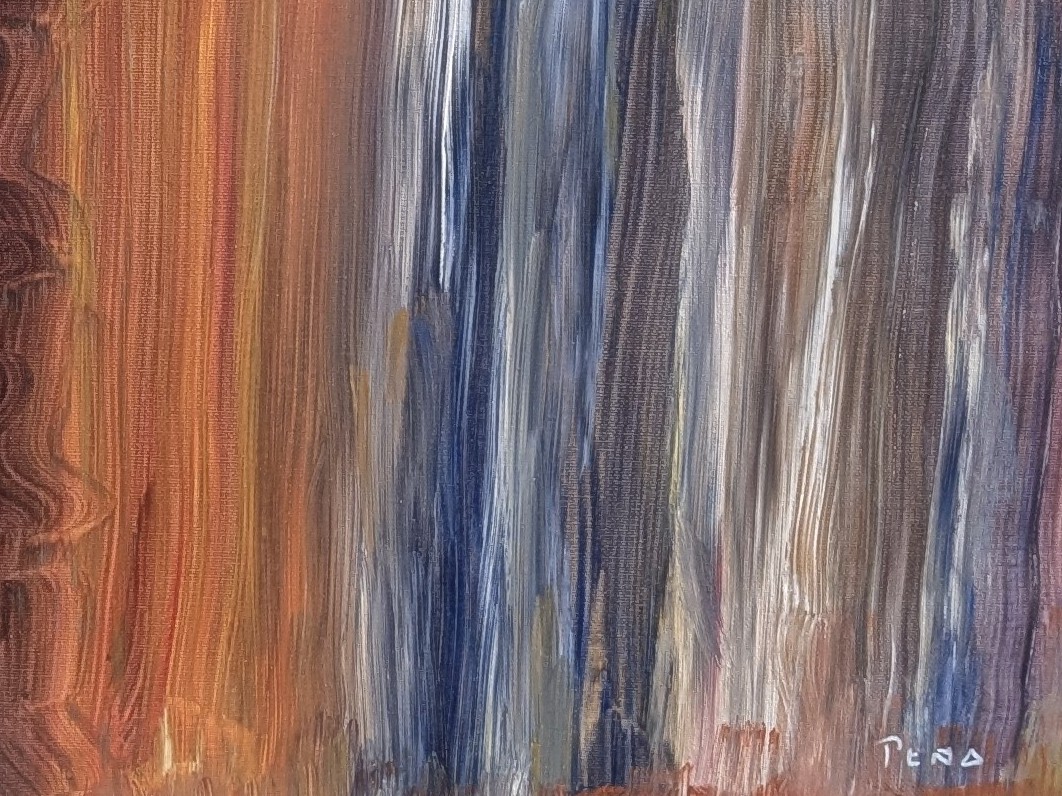
Thermal Contrast: The color strategy relies on a stark division of temperature. The left and central sections dominate the composition with highly saturated warm tones—ranging from pale pinks and bright crimson to deep earths, ochres, and near-black browns. This thermal density is abruptly cut on the right third by a block of cold cobalt blues, muted greys, and stark whites.
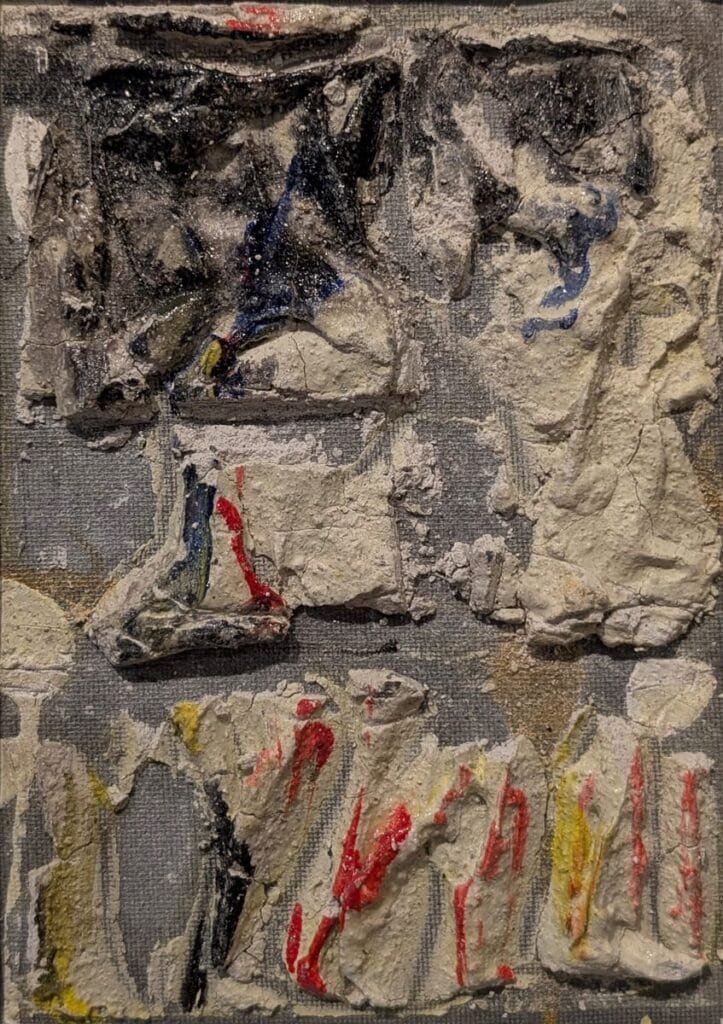
Material Friction: The application of the acrylic varies in density. While the outer blocks feature smooth, continuous vertical brushstrokes, the central dark brown band exhibits a high concentration of matter (empaste). In this area, the tool changes direction, creating horizontal patterns and micro-textures that catch the light and add physical weight to the core of the piece.
III. Graphemic Elements and Signatures
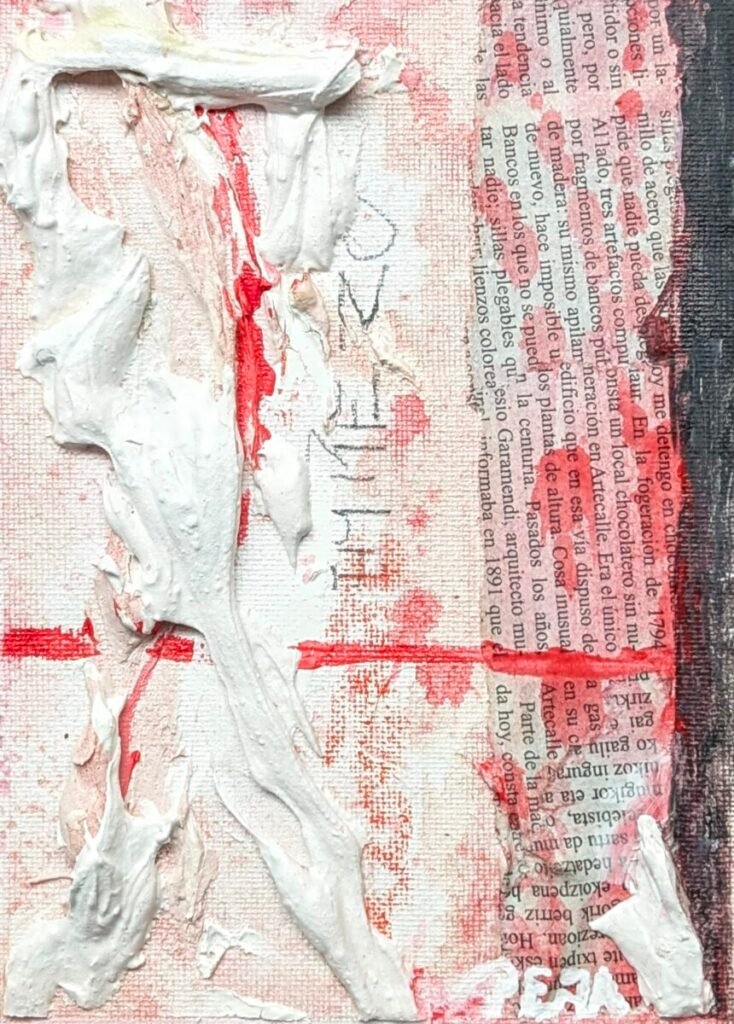
Incised Markings: The lower-left quadrant features fine, scratch-like incisions and subtle hand-written graphite or stylus markings over the pink layer. These raw, non-legible graphic signs introduce an element of human scale and graphic detail within the broader fields of color.
Integration of the Signature: The piece is signed “PEÑA” in white acrylic at the bottom right corner, integrated directly into the dark, cold background of the final vertical block.